
The Pilates girl trend was easy to dismiss at first. It looked like another internet phase built on matching sets, slick buns, and pretty routines filmed in soft light. But that read misses what actually happened. The look stayed around because the habit did. And one of the clearest signs is how many people stopped treating Pilates like a class they tried once and started making space for it at home.
A lot of trends in fitness burn hot and disappear fast. They work well in photos, then people move on. Pilates did not really follow that path. It kept growing because it gave people something they were already looking for.
The appeal is not hard to understand. The workout feels challenging, but not chaotic. It asks for control. It slows things down. It works muscles in a way that feels sharp the next day, but it does not always leave the body wrecked. That matters more now than it did a few years ago. Plenty of people are tired of workouts that feel like punishment.
That is part of why the Pilates girl image changed. It used to feel mostly visual. Now it feels tied to a certain kind of routine. Someone who is into Pilates usually is not only chasing a look. They are often chasing a feeling, too. Better posture. A calmer morning. Stronger legs. Less noise.
Studio classes helped make Pilates visible again. That shift makes more sense when Pilates has stayed one of the most booked workouts for years, which helps explain why more people now want a version of that routine at home. The home setup is what made it feel permanent.
It is one thing to enjoy a workout. It is another thing to make space for it at home. Once someone starts shifting furniture, clearing a corner, and figuring out where a machine will go, it stops feeling like a short phase. It becomes part of daily life.
That shift says a lot. Home setups solve the part nobody posts much about. Schedules. Travel time. Packed classes. The small friction that makes a good routine harder to keep. It is one thing to love Pilates when everything lines up. It is another thing to keep doing it on a normal Tuesday when work runs late, and nobody wants to cross town for a 6:30 class.
Once you notice the Pilates home setup trend, it is hard not to see the same details again and again.
Most of the rooms are not loud. They lean soft, clean, and a little edited. Light walls. Neutral tones. A mirror. Open floor space. Maybe a basket with straps, loops, and small weights. Sometimes there is a candle, a stool or an oversized plant in the corner. Nothing feels random.
That is part of the appeal, too. The room does not look like a hardcore gym. It looks like it belongs in the rest of the home. It fits the same visual world as good skincare, clean shelves, and quiet luxury interiors. That is why the trend works so well on style-driven sites. The workout space is not separate from the lifestyle. It is part of it.
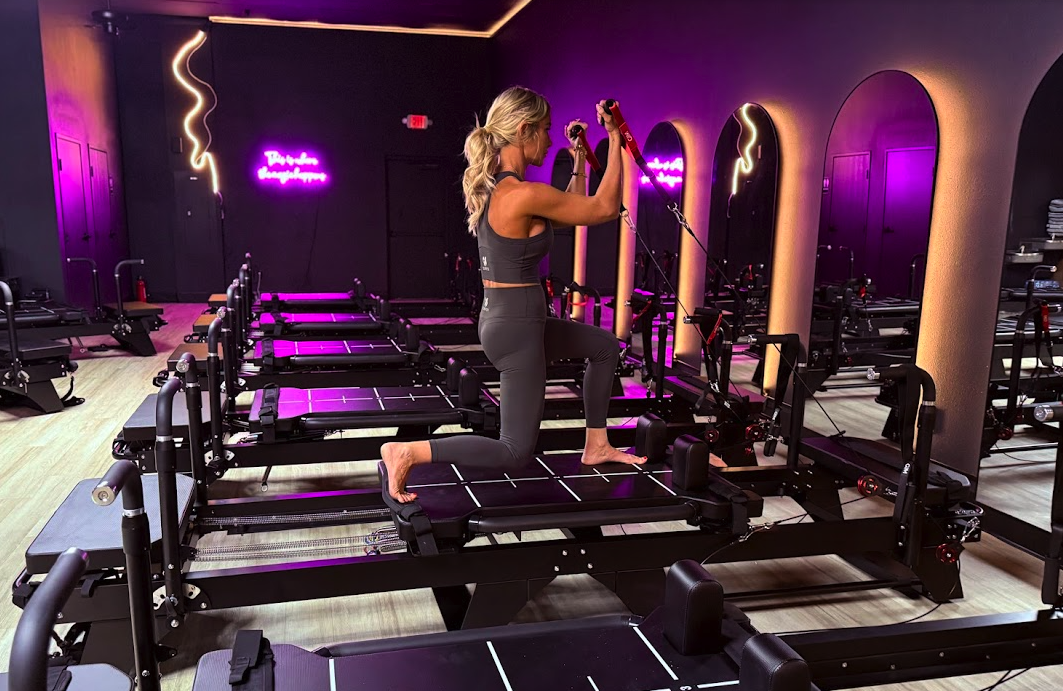
Mat Pilates still has a place, and a lot of people start there. But when home setups get more serious, the machine usually becomes the center of the room.
That is because the machine changes the experience. That added structure helps explain why people are drawn to the kind of strength, balance, and flexibility Pilates is known for, especially when they want a workout that feels controlled instead of chaotic.
A reformer-style setup adds movement, resistance, and structure in a way a mat cannot fully copy. The carriage moves. The springs create tension. The footbar and straps guide the body through exercises that feel more precise. For beginners, that can make the workout easier to understand. For experienced users, it can make it more challenging in the right way.
Then there is the other layer. Some people do not just want the classic reformer feel. They want something tougher and more intense, but still low-impact. That is where the conversation starts to shift toward stronger machine-based formats that push more through slow resistance and longer muscle engagement.
In that context, it makes sense that some home users spend time comparing machines and reading through options before choosing one. For anyone curious about that category, it is easy to see why people looking into a more advanced megaformer for sale for a serious home Pilates space start weighing how much intensity they want, how much room they have, and whether the machine will suit daily use instead of occasional workouts.

The strongest trends usually match real behavior. Pilates does that well.
It fits people who want structure, but not chaos. It works for those who care about strength but do not want every workout to feel aggressive. It also fits the wider shift toward routines that feel sustainable. That word gets overused, but here it really matters. A workout does not become part of someone’s week because it sounds impressive. It becomes part of the week because it fits.
Pilates is especially strong there. It can live inside a morning routine. It can fit a lunch break. It can be the kind of movement someone does without needing hours of mental buildup first. That ease is underrated. People keep habits that do not require too much drama.
And once a room is set up for it, the barrier gets even lower. That is why home setups say so much. They are not just about convenience. They show intention.
The visual side of Pilates is still part of the story. Nobody needs to pretend otherwise. The matching sets, grip socks, clean mirrors, and polished rooms helped build the trend. But those things alone would not have kept it alive this long.
What gave it more weight was the fact that the routine made sense. It gave people a type of strength that felt controlled. It gave the home a dedicated corner that served a real purpose. It gave the day a softer shape.
That is why the Pilates girl era feels bigger now, not smaller. It moved past the stage where it lived mostly on feeds and mood boards. It settled into real rooms, real routines, and real habits. At that point, it stops looking like a passing trend and starts looking like a new normal.