

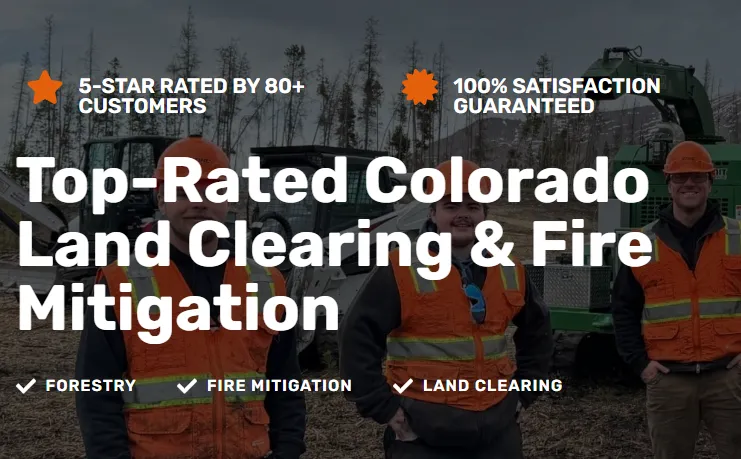
Land clearing is often necessary to restore usability, control overgrowth or prepare for future projects. However, traditional clearing methods can be disruptive, time-consuming and environmentally harsh if not planned carefully. Modern landowners increasingly look for solutions that balance efficiency with long term land health rather than relying on heavy disturbance.
Forestry mulching has emerged as a practical approach that addresses these concerns. Instead of removing vegetation entirely or hauling debris off-site, this method transforms unwanted growth into nutrient-rich mulch directly on the land. BEAR CLAW LAND SERVICES approaches land clearing with a focus on efficiency and sustainability, using forestry mulching to help property owners regain control while protecting soil and surrounding ecosystems.
Understanding how this approach works and where it adds value allows landowners to make informed decisions. When land is cleared with care and intention, it remains productive, stable and easier to manage over time.
Land clearing traditionally involved cutting, piling, and removing vegetation. While effective, this approach often left soil exposed and required additional cleanup.
This process is altered by forestry mulching, which grinds vegetation into fine material that stays on the ground. This approach reduces waste while clearing land. When cleanup and clearing take place at the same time, efficiency increases.
Balance is the main objective of modern techniques.
Time is a critical factor in land management projects. Slow clearing delays development, maintenance and access.
Mulching equipment handles trees, brush, and undergrowth in a single pass. This reduces the need for multiple crews or stages. Projects move forward faster when clearing is streamlined.
Efficiency supports better scheduling.
Traditional clearing generates large volumes of debris that must be hauled away or burned. This adds cost and complexity.
With forestry mulching, vegetation is processed on-site. The resulting mulch eliminates the need for hauling. Fewer logistics simplify project management.
On-site processing reduces extra steps.
Exposed soil is vulnerable to erosion and compaction. Traditional clearing often strips protective layers away.
Mulch left behind helps retain moisture and stabilize soil. Nutrients return to the ground as material breaks down. Soil health improves naturally over time.
Healthy soil supports long term land use.
After clearance, erosion is a serious problem, particularly on slopes or close to water sources. Bare earth can be readily washed away.
Mulch serves as a barrier that lowers runoff. When it rains, the stabilized soil stays in place. Controlling erosion promotes land durability.
Long term harm is avoided via protection.
Unchecked regrowth frequently encourages unwanted or invasive species. This disparity is even worse by subpar clearing techniques.
Mulching breaks up vegetation into fine material, which prevents aggressive regrowth. Reestablishment of native flora is frequently more uniform. The beauty and functionality of land are enhanced by balanced regrowth.
Regrowth under control promotes sustainability.
Overgrown terrain restricts movement and inspection. Dense brush obstructs workspaces and pathways.
Areas that have been cleared and mulched are easy to get around in. Planning, enjoyment, and maintenance are all supported by better access. Careful cleaning increases mobility.
Access improves the usability of land.
Removing all vegetation disturbs the environment. Organic matter and ground cover are essential to wildlife.
Mulch removes undesirable growth while offering protective protection. This strategy preserves the equilibrium of the habitat. Coexistence with the local fauna is supported by responsible clearing.
Ecosystems benefit from balance.
Heavy clearance techniques cause noise, soil movement, and the spread of debris on adjacent land.
Mulching keeps material contained which reduces disruption. Adjacent lands are protected by cleaner operations. Impact control enhances neighbor interactions.
Low disruption encourages appropriate land care.
Chainsaws, dragging, and burning are all part of traditional clearing, which raises the risk.
Mulching reduces the number of steps involved in processes. Less handling reduces the chance of an accident. Safer procedures safeguard employees and assets.
Simplified procedures increase safety.
Different properties have different goals. Agricultural land, recreational areas and development sites require adaptable solutions.
Forestry mulching in Colorado accommodates varied terrain and vegetation types. Flexibility makes it suitable for many applications. Versatility increases its value.
One method supports multiple uses.
Cleared land requires ongoing care to remain manageable. Rapid overgrowth is a result of poor clearance.
Over time, mulched areas are simpler to manage. Reduced regrowth causes maintenance cycles to lag. Efficiency increases over time.
A prepared property is easier to manage for longer.
Overgrown terrain seems disorganized and uncared for. Clearing enhances appearance as well as functionality.
Mulched terrain looks more deliberate and well organized. Visual clarity promotes better planning judgments. Appearance has an impact on satisfaction.
Order enhances usability.
Development projects require stable, accessible land. Poor clearing complicates preparation.
Mulching prepares land for surveying, fencing or construction. Early preparation reduces future obstacles. Readiness improves project flow.
Preparation saves time later.
Burning or hauling debris increases emissions and waste. These methods leave a larger environmental footprint.
Mulching reduces transport needs and keeps organic material on-site. Lower impact supports responsible land management. Sustainability improves with thoughtful choices.
Environmentally mindful methods matter.
Soil that is bare quickly loses water. Mulch enhances absorption.
Increased water retention lowers runoff and promotes vegetation. Stronger water cycles increase the resilience of the land. Controlling moisture promotes stability.
A well balanced water flow protects soil.
Some areas regulate clearing methods to protect soil and ecosystems. Mulching aligns well with these goals.
Responsible clearing supports compliance and reduces conflict. Prepared land meets expectations more easily. Awareness improves planning.
Preparedness avoids complications.
Making decisions about clearing land can frequently feel overwhelming. There is uncertainty due to different approaches and results.
Forestry mulching offers a straightforward, effective solution when guided by BEAR CLAW LAND SERVICES. Predictable outcomes lessen worry. When procedures are simple, confidence increases.
Having clarity makes decision making easier.
The practice of sustainable clearing encourages responsible ownership. Owners benefit in the long run.
Regular management incorporates proactive care. Thoughtful approaches facilitate long-term stewardship. Habits influence land outcomes.
Stewardship enhances the quality of land.
Each property has its own goals. Clearing ought to help those plans.
Forestry mulching combines sustainability and efficiency. Results are better when approaches align with objectives. Planning guarantees efficient use of land.
Making deliberate decisions promotes achievement.
Uncertainty causes delays in land improvement efforts. Action is encouraged by clear solutions.
Owners can move forward with confidence when they are aware of the advantages of forestry mulching. Landowners in Missouri gain from strategies that strike a balance between environmental preservation and efficiency.
Confidence supports progress.
Soil health and environmental balance don’t have to be sacrificed for effective land clearing. A workable method that removes undesirable plants while preserving the area beneath it is forestry mulching. This technique enhances both immediate usability and long term sustainability by lowering debris, stabilizing soil and promoting better regrowth. Property owners can repair and maintain their land in a way that supports future objectives and maintains natural balance for years to come with expert execution from BEAR CLAW LAND SERVICES.

Are the men in house ready to take their style game up a notch? Aly at Vogue Vocal is the eyes and ears of entertainment industry with that Gen-Z x-factor! Aly’s personal style statement raises the bar high and knocks it out of the park so trust him for picking the best for Vocal Fashion, our e-magazine edit, the heart and soul of Vogue Vocal!