
Can you describe your role at Lela Rose and what a typical day looks like?
I am a Product Development Associate at Lela Rose. My role is to manage a garment’s full lifecycle by coordinating design, production, and sales so that a sketch becomes a wearable, market-ready piece. I source fabrics, trims, and embroideries that contribute to what makes Lela Rose recognizable, and I work with pattern makers and tech designers to realize construction and fit that match the designer’s intent. A typical day requires juggling vendor conversations, sample reviews, and production timelines, then documenting changes so teams downstream can execute the final product.
What are the specific contributions you make to each season at Lela Rose?
Each season I source fabrics, trims, and embroideries from European and Asian suppliers for more than 100 styles. That work includes identifying the right suppliers, testing materials, and negotiating delivery windows so sampling and production stay on schedule. I collaborate with pattern makers and tech designers to ensure garments meet the intended construction and fit, and I develop embroidery and fabric manipulation techniques — an example being the gold velvet dress Anne Hathaway wore for The Odyssey press junket. I also own development of laser cut leather styles that have become Lela Rose staples, and I help present collections during market week to major retailers such as Bergdorf Goodman, Saks, Neiman Marcus, Farfetch, Moda Operandi, and Net-A-Porter.
How did your time at Prabal Gurung shape your approach to design and production?
At Prabal Gurung I sourced fabrics, trims, and custom embroideries for multiple runway collections, including SS26, FW26, PF27, and SS27. I supported runway shows and coordinated closely with pattern makers to achieve precise fit and construction. Working with Indian suppliers to create intricate embroidery for evening looks and managing sample making across domestic and overseas factories taught me how to translate a high-end design into something production-ready without losing the original intent. Those experiences reinforced the importance of tight communication with suppliers and rigorous quality control throughout the sampling process.
How did your thesis at FIT influence your work, and what recognition did it receive?
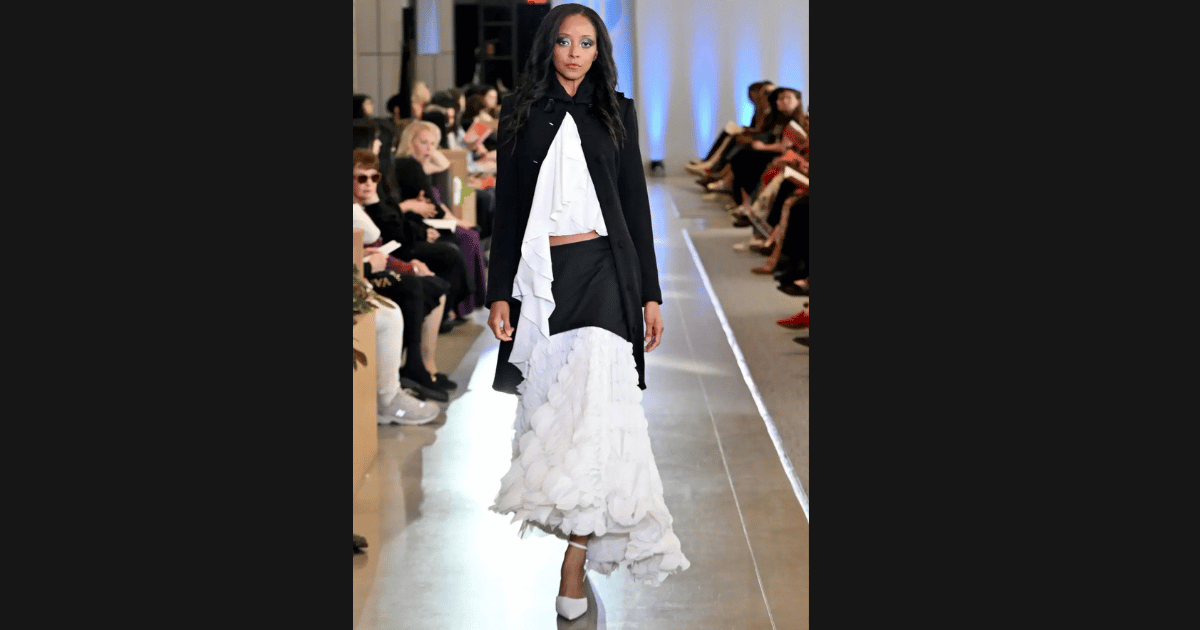
My thesis collection from FIT provided a first, concentrated experience of producing a full collection: concept development, sourcing, construction, and presentation. The collection earned the FIT Critic’s Award Winner 2023 and was featured on Vogue, WWD, and Fashionista. That attention affirmed the viability of my creative voice and helped me understand how to present a coherent narrative through fabric, silhouette, and detail. The process also taught me how to manage a collection’s many moving parts while maintaining a clear aesthetic point of view.
Tell me about your first collection, The Ghost in My Room. What inspired it and why October for the launch?
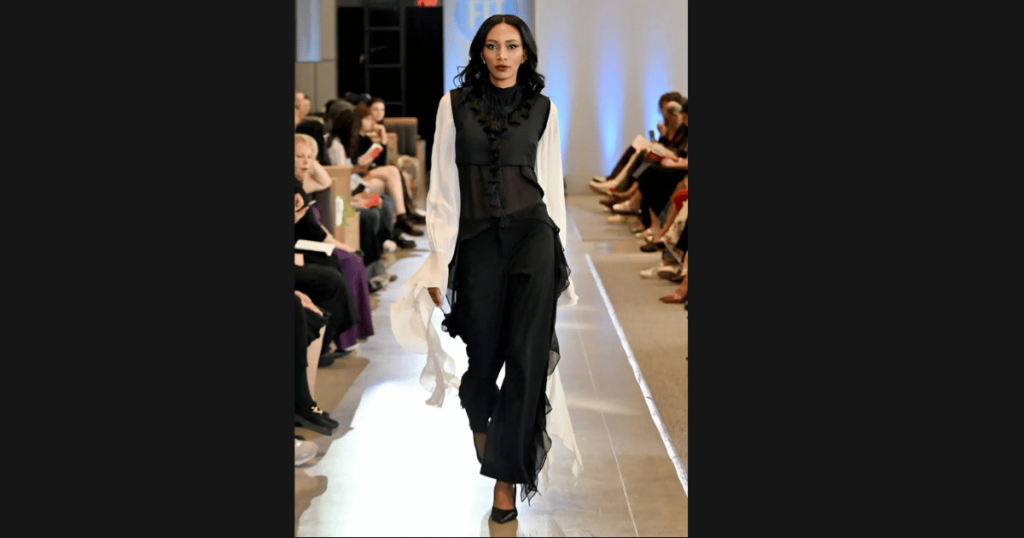
The Ghost in My Room is the first collection I developed while working full time. The title and direction come from a childhood memory: the way a curtain’s reflection on a wall looked like a ghost. The collection romanticizes that fear and treats it as an intimate image translated into garments that examine presence and absence. Developing the collection while holding a 9 to 5 at Lela Rose meant creating time after hours, and October is when I will present it as my formal debut. The timing allows me to bring the project from sample to presentation with the attention to materiality and fit it requires.
How did the technical skills you use at Lela Rose and Prabal Gurung inform this personal project?
The technical knowledge I use daily — sourcing fabrics and trims, developing embroidery, and working through construction with pattern makers and tech designers — was essential to realizing The Ghost in My Room. My experience developing embroidery and fabric manipulation at Lela Rose and managing custom embroideries and sample production at Prabal Gurung meant I could experiment with surface texture and detailing while keeping build and fit practical for presentation. Those shop-floor skills made it possible to pursue a concept-driven project with production awareness at every step.
Balancing both roles requires discipline and scheduling. My day job needs focused coordination across teams, so evenings and weekends are when I source materials, sketch, and work through patterns and samples for my collection. The overlap of skills helps: techniques I refine at Lela Rose often inform material choices for my own work, and the production problems I solve in my day job sharpen how I plan samples and timelines for my collection. It is long hours, but the tradeoff is the ability to test ideas with a professional rigor that translates into stronger work.
Expect a personally driven presentation that pairs a small, specific memory with careful technical execution. The collection explores how a childhood fear became a tender memory, rendered through texture, silhouette, and surface detail. Technically, the pieces will reflect precise construction and detailed surface work, informed by the same production standards I apply at Lela Rose and Prabal Gurung. I aim for garments that read clearly in concept and stand up to the realities of fit and wear.
nLearn the technical side of garment making as intensively as you develop concept. Work with pattern makers, understand fit, and learn how to source materials globally. Experience in sample management and production makes an idea feasible and scalable. Accept that building an early collection often requires time outside paid work; persistence and careful time management are essential.
I will continue in my role at Lela Rose while presenting The Ghost in My Room. After the launch I will assess the response, refine the collection where necessary, and continue developing both professionally and creatively. The FIT experience and the collaborations I have had with major retailers and suppliers provide a steady reference point as I take this next step.