

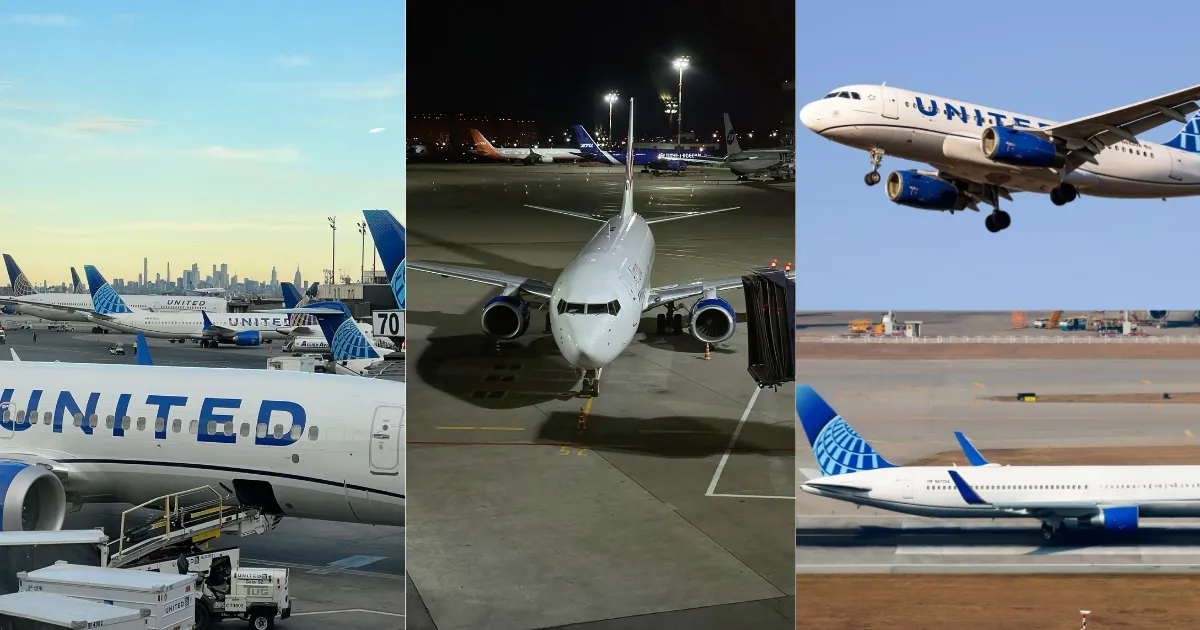
If you thought your morning commute was stressful because the barista ran out of oat milk, wait until you hear what’s been happening at 30,000 feet. At Vogue Vocal, we live for a little drama, but usually, it’s restricted to the red carpet or a messy celebrity breakup. Lately, however, the real “main character energy” is coming from the cockpit. United Airlines has had a bit of a moment recently with enough diversions like United flight UA109 diversion and emergency squawks to make even the most seasoned traveller reach for a double martini.
From mechanical mishaps to a flight attendant’s blister (yes, really), the sky has officially gotten weird. Buckle up, because we’re diving into the flight paths that took a very unexpected turn.

Picture this: You’re eight hours into an 11-hour flight from San Francisco to Rome. You’ve finished your second rom-com, your neck pillow is finally adjusted, and you’re dreaming of Cacio e Pepe. Suddenly, the “Fasten Seatbelt” sign isn’t just a suggestion—it’s an order.
On June 22, 2025, the United Airlines UA507 emergency diversion became the talk of the travel world. This flight, operated by a 26-year-old Boeing 777-200ER (registration N76010), departed SFO at 5:03 p.m. with 275 passengers who were very much expecting the Colosseum.
Instead, they got a “Squawk 7700” (the universal code for Houston, we have a problem). Due to an unspecified mechanical issue over the Atlantic, the crew executed a rapid descent to 21,000 feet and headed straight for Reykjavík. They landed safely at Keflavík International Airport around 8 a.m. local time. While the flight to Rome was canceled, United did put everyone up in hotels. Vogue Vocal’s take? If you’re going to be stranded, Iceland is a total aesthetic win, but we’d still be salty about missing our dinner reservation in Trastevere.

If you think your vintage wardrobe is high-maintenance, try maintaining a 28-year-old aircraft. On September 28, 2025, United Airlines flight UA939 emergency protocols were triggered less than an hour after taking off from London Heathrow (LHR).
The aircraft, a Boeing 777-200ER (registration N788UA), was supposed to be a smooth 10-hour hop to San Francisco. But while cruising at 32,000 feet over Northern England, the crew felt “severe airframe and engine vibrations.” Basically, the plane was doing a literal shimmy that no one asked for.
The pilots didn’t mess around. They declared an emergency, entered a holding pattern near Blackpool, and performed a fuel dump to lighten the load for landing. They even had to shut down the number one (left-hand) engine. Imagine looking out the window and seeing an engine just… off. We would have simply passed out. Thankfully, all 284 people on board landed safely back at Heathrow by 18:11 BST. The plane stayed grounded for 24 hours, probably needing a spa day as much as the passengers did.

Now, this one is for the “you can’t make this up” files. On October 30, 2025, the United flight UA109 diversion proved that sometimes, it’s the small things that ground a massive jet.
The Boeing 787-8 Dreamliner (registration N28912) left Munich (MUC) at 9:00 a.m., bound for Washington Dulles (IAD). About 90 minutes in, over the deep blue of the North Atlantic, the crew decided to pull a U-turn. Why? A flight attendant was suffering from a medical issue—specifically, severe pain from a blister.
Look, we at Vogue Vocal know that the wrong shoes can be a literal nightmare, but grounding a Dreamliner for a blister is the ultimate “I’m leaving the party early” move. In all seriousness, crew safety is paramount, and if a flight attendant can’t perform their safety duties, the plane has to land. They diverted to Dublin (DUB), a strategic ETOPS (Extended Twin-Engine Operations) hub. After a quick medical check and a 75-minute pitstop, the flight continued to DC, arriving only two hours late. Honestly? We’ve waited longer for a brunch table in Manhattan.
Panic is never in style. If you find yourself on a flight that’s suddenly heading toward a country you didn’t have on your itinerary, here’s how to handle it with grace:

You might be asking, “What happened to just getting from A to B?” The truth is, as the global fleet ages and flight paths become more crowded, these “safety-first” diversions are becoming the new normal. Whether it’s the United Airlines flight UA939 emergency or a medical U-turn, airlines are choosing the “better safe than sorry” route more than ever. At Vogue Vocal, we think it’s a mix of heightened caution and, frankly, a bit of bad luck for United’s 2025 schedule.
The next time you book a flight, maybe pack an extra pair of comfortable socks (to avoid the UA109 fate) and a sense of adventure. After all, you never know if your trip to Rome might include an unscripted detour to the Land of Fire and Ice.
Obsessed with the high-altitude drama? If your search history is basically just a collection of wild flight diversions and “what just happened” aviation tea, you need to check out our Woke Vogue collection. We’ve got everything you need to satisfy that thirst for the unfiltered truth behind the world’s most chaotic commutes.

It is a transponder code used by pilots to signal a general emergency to Air Traffic Control. It gives the flight priority over all other air traffic.
The United flight UA109 diversion was caused by a crew member experiencing a medical issue (specifically pain from a blister) that prevented them from completing the transatlantic journey safely.
The Boeing 777-200ER involved in the UA939 incident was 28 years old, having been delivered to United in July 1997.
No. All 275 passengers and 14 crew members landed safely in Iceland with no reported injuries.
It stands for Extended Twin-Engine Operations. It’s a certification that allows twin-engine planes to fly long-distance routes that are a certain distance away from the nearest emergency airport.
United Flight 939 experienced severe engine vibrations shortly after leaving London for San Francisco on September 28, 2025 which forced an emergency return to Heathrow.
Dublin is a primary ETOPS alternate airport, meaning it is perfectly positioned and equipped to handle medical and mechanical emergencies for flights crossing the Atlantic.
Yes, as long as they meet rigorous maintenance standards. However, older planes may experience more frequent mechanical “glitches” requiring diversions.

Are the men in house ready to take their style game up a notch? Aly at Vogue Vocal is the eyes and ears of entertainment industry with that Gen-Z x-factor! Aly’s personal style statement raises the bar high and knocks it out of the park so trust him for picking the best for Vocal Fashion, our e-magazine edit, the heart and soul of Vogue Vocal!